


Choosing a plastic bucket looks simple, but the wrong material, size, lid, or handle can cause leaks, product damage, higher shipping costs, and customer complaints.
I choose a plastic bucket by checking the filling product, capacity, material, sealing level, handle strength, stacking needs, transport conditions, and compliance requirements. For bulk orders, I also compare customization, MOQ, production capacity, quality control, and container loading efficiency.
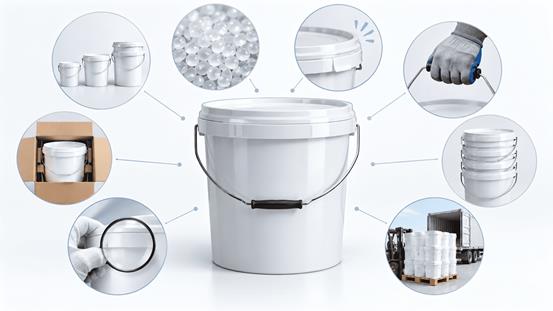
I have worked with many plastic packaging projects over the years. One lesson comes up again and again: I should never choose a bucket by capacity and price alone. A 20L bucket for honey and a 20L bucket for construction chemicals may look similar, but their real requirements can be very different.
Which Plastic Bucket Material Should I Choose?
Choosing between PP and HDPE without checking the product inside can create problems later. The material affects stiffness, impact resistance, temperature performance, and chemical compatibility.
I normally choose PP when I need a rigid bucket with good shape and presentation. I consider HDPE when toughness and impact resistance matter more. For food or chemical packaging, I also check food-contact or chemical compatibility requirements before confirming the material.
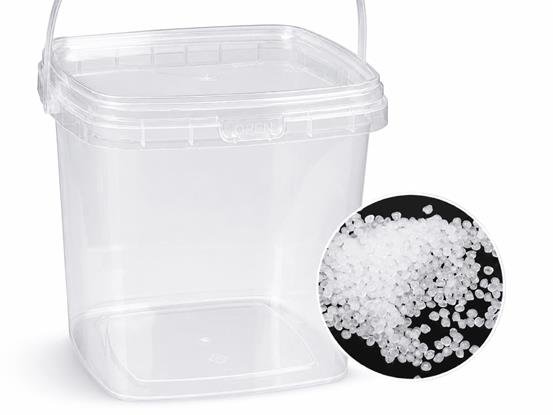
PP Plastic Buckets
PP means polypropylene. I often use PP buckets for food, candy, sauces, powders, animal feed, coatings, and other packaged products.
PP usually gives the bucket a relatively rigid body. This helps the bucket keep its shape during filling, stacking, storage, and display.
I often describe PP as the "stiffer" option when speaking with buyers. This does not mean every PP bucket is stronger than every HDPE bucket. Bucket design, wall thickness, raw material quality, and reinforcement structure also matter.
HDPE Plastic Buckets
HDPE means high-density polyethylene. I usually consider HDPE when a customer needs more toughness and resistance to impact.
HDPE buckets are common for chemicals, lubricants, cleaning products, construction materials, agricultural products, and industrial packaging.
If workers move the buckets frequently, or if the buckets may receive knocks during transport, HDPE can be worth testing.
|
Factor |
PP Bucket |
HDPE Bucket |
|
Body feel |
More rigid |
More flexible |
|
Impact resistance |
Good |
Usually better |
|
Shape retention |
Strong |
Good |
|
Common uses |
Food, powders, retail packaging |
Chemicals, oils, industrial products |
|
Low-temperature use |
Needs product testing |
Often considered for tougher conditions |
|
Selection basis |
Product and use conditions |
Product and use conditions |
I never recommend choosing the material from this table alone. I ask what the buyer plans to fill, how heavy the product is, how long it will stay inside, and what temperature it may face. For chemicals, I also recommend compatibility testing with the actual product.
What Plastic Bucket Size Do I Need?
A bucket marked 5L, 10L, or 20L does not tell me how many kilograms of product it can hold. The filling weight depends on the density of the material inside.
I first confirm the target filling volume or weight. If the buyer gives me kilograms, I also ask for product density. I then leave enough headspace for closing the lid, handling the product, and allowing for normal expansion during storage or transport.
Small Plastic Buckets
I often see 1L, 2L, 2.5L, 3L, 4L, and 5L buckets used for:
Honey
Candy
Nuts
Sauces
Food ingredients
Samples
Cleaning products
Small industrial packs
For these sizes, appearance often matters almost as much as strength. Buyers may ask about color, printing, labels, lid style, and handle design.
10L Plastic Buckets
I see 10L buckets used in food, coatings, chemicals, building materials, feed, and industrial packaging.
At this size, I pay more attention to the handle and base. A weak handle may feel fine when the bucket is empty but may fail when the bucket is full.
20L and 5 Gallon Plastic Buckets
20L buckets and 5 gallon buckets are common in bulk packaging. A US 5 gallon bucket is about 18.9 liters, so the market often includes 18L, 18.9L, 20L, and similar sizes.
I often use these sizes for:
Paint
Coatings
Adhesives
Chemicals
Lubricants
Food ingredients
Construction materials
For large buckets, I focus on the bucket wall, rim, lid, handle, and stacking structure.
A heavy liquid puts much more pressure on the bucket than a light powder. That is why I do not use nominal volume as the only selection factor.
Which Plastic Bucket Shape Works Best?
Round buckets are common, but square, rectangular, and oval buckets can solve different packing and display problems. The shape affects filling, stacking, pallet use, shipping, and shelf presentation.
I choose the bucket shape based on how the product will be filled, stored, transported, and displayed. Round buckets are versatile. Square and rectangular buckets can use pallet and shelf space more efficiently. Oval buckets are often selected when packaging appearance matters more.

Round Plastic Buckets
Round plastic buckets are the type I see most often.
Their structure distributes pressure well, and lid systems are widely available. They also work with many filling lines.
I commonly recommend round buckets for food ingredients, paints, coatings, chemicals, powders, and building materials.
Square Plastic Buckets
Square buckets reduce some of the empty space that appears between round containers.
If a distributor ships large quantities, this can improve pallet or warehouse space use.
I still check the corners carefully because shape alone does not guarantee better stacking strength.
Rectangular and Oval Buckets
Rectangular buckets can work well when customers want more efficient shelf layouts or a specific pack shape.
Oval buckets are common in some retail and branded packaging applications. They can give a product a different appearance on the shelf.
|
Shape |
Main Advantage |
Typical Use |
|
Round |
Simple, widely used, stable structure |
Food, paint, chemicals |
|
Square |
Better space use |
Retail, ingredients, industrial packaging |
|
Rectangular |
Efficient shelf and packing layout |
Food and specialty products |
|
Oval |
Strong visual presentation |
Branded and retail packaging |
I usually calculate transport and pallet use before confirming a bucket shape for a large order. A bucket that looks attractive can become expensive if it wastes container space.
Which Bucket Features Matter Most?
A thick-looking bucket can still fail if the lid, handle, rim, or base is weak. I focus on the parts that carry force during filling, lifting, stacking, and transport.
I check lid fit, seal design, tamper-evident structure, handle strength, stacking stability, leak resistance, and material compliance. For liquid products, I put extra focus on the lid and rim because poor sealing can create losses even when the bucket body is strong.
Lid and Seal
I check whether the lid matches the bucket rim correctly.
For dry products, a simple lid may be enough. For liquids, I normally need a stronger sealing system.
I ask buyers whether they need:
Dust protection
Moisture protection
Leak resistance
Tamper evidence
Long-distance transport sealing
These are different requirements.
Tamper-Evident Design
I often recommend a tamper-evident lid for food, chemicals, coatings, and retail products.
The first opening breaks or changes part of the closure. This gives the customer a visible sign that the package has been opened.
Handle Strength
Handle design becomes more important as filling weight increases.
I do not only ask whether the handle is plastic or metal. I also check the handle connection points and the bucket rim.
A strong handle attached to a weak rim can still cause failure.
Stackability
I check how the bucket base fits with the lid below it.
Good stacking design helps reduce movement in warehouses and trucks. It also makes palletized storage easier.
Leak Resistance
For liquids, I recommend testing the complete package with the actual product when possible.
A successful empty-bucket inspection does not always show how the package will behave after filling, stacking, vibration, and temperature changes.
How Should I Match a Plastic Bucket to the Application?
I cannot choose the same bucket specification for food, paint, chemicals, and construction products. Each filling product puts different demands on the package.
I start with the contents inside the bucket. Food buyers usually focus on food-contact material and cleanliness. Paint and chemical buyers focus more on sealing and compatibility. Construction and lubricant buyers often need stronger handles, better impact resistance, and reliable stacking.
Food Packaging
I use plastic buckets for honey, candy, nuts, sauces, ingredients, powders, and other food products.
For these projects, I usually check:
Food-contact material
Odor
Cleanliness
Lid seal
Tamper evidence
Printing and labeling
If the package will appear in retail stores, appearance becomes more important.
Paint and Coatings
Paint and coatings can be heavy, and they may travel long distances.
I focus on the seal, rim, handle, bucket wall, and stacking performance.
A leak during ocean freight can damage more than one bucket, so I do not treat sealing as a small detail.
Chemical Products
Chemical packaging needs more careful material selection.
I ask for the chemical name, concentration, storage temperature, filling temperature, and expected storage time when available.
I do not assume that a bucket is suitable for every chemical just because it is made from PP or HDPE.
Construction Materials
Adhesives, waterproofing compounds, powders, mortar additives, and sealants can put heavy loads on the bucket.
I usually pay more attention to wall strength, base design, handle strength, and stacking.
Lubricants and Agricultural Products
Lubricants need reliable sealing and handling strength.
Agricultural products may need moisture protection, easy handling, and good cost control.
The correct bucket always depends on the product and the supply chain around it.
What Should I Check Before Buying Plastic Buckets in Bulk?
Bulk purchasing adds new risks. A bucket can pass a basic sample check but still create problems when thousands of units enter production, packing, warehousing, and export shipping.
Before I place a bulk plastic bucket order, I confirm material, capacity, filling weight, lid type, handle, printing, MOQ, lead time, testing, production capacity, inspection method, packing, and container loading quantity. I also test samples with the real filling product when possible.
My Plastic Bucket Buying Checklist
|
Item |
What I Confirm |
|
Material |
PP or HDPE |
|
Capacity |
Nominal and usable filling capacity |
|
Filling weight |
Actual kilograms per bucket |
|
Wall structure |
Suitable for filling and stacking |
|
Lid |
Standard, sealing, or tamper-evident |
|
Handle |
Plastic or metal |
|
Printing |
Silk screen, label, heat transfer, IML |
|
Color |
Standard or custom |
|
MOQ |
Standard or customized order quantity |
|
Lead time |
Sample and bulk production schedule |
|
Packing |
Bags, cartons, pallets, or custom packing |
|
Shipping |
Container loading quantity |
Sample Testing
I prefer to test samples before the first large order.
For a real evaluation, I fill the bucket with the actual product or a material with similar weight.
Then I check:
Filling
Lid closing
Lifting
Leakage
Stacking
Drop resistance
Transport stability
I have seen buyers compare samples only by weight. I do not recommend that method.
A heavier bucket is not automatically a better bucket. Rib design, rim strength, base structure, resin quality, wall distribution, and lid design all affect performance.
Shipping Cost
Plastic buckets can take up a lot of volume.
This means container loading quantity can have a large effect on the real landed cost.
I normally compare:
Bucket price + packing cost + container quantity + freight cost
A slightly more expensive nestable bucket can sometimes reduce total logistics cost if it loads more efficiently.
What Plastic Bucket Customization Options Are Available?
Standard buckets work for many industrial buyers, but brands and distributors often need custom colors, logos, labels, lids, handles, or new molds to match their products.
I can normally customize bucket color, logo, printing, labels, IML, lid style, handle, and packing. For large projects, I can also develop a custom mold. I usually recommend using an existing mold first when the order volume is still small.
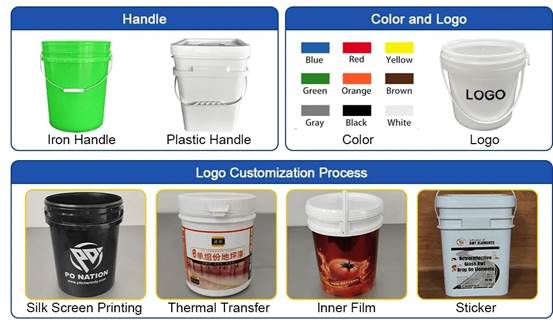
Color and Branding
I can use different bucket and lid colors to separate product lines or match brand identity.
Logo options may include silk screen printing, labels, heat transfer printing, or other methods based on the bucket surface and order quantity.
IML
IML means in-mold labeling.
The label becomes part of the packaging during molding. I often see this option in food, paint, and retail packaging.
It gives the bucket a strong visual finish and allows a larger printed area.
The setup usually makes more sense for larger repeat orders.
Custom Lid and Handle
Some buyers need a specific tamper-evident lid, sealing structure, pouring design, or handle type.
I check these parts together rather than separately because the complete package needs to work as one system.
Custom Mold
A custom mold can create a new size, shape, structure, or branding area.
I usually recommend this route when the customer has stable demand and a clear product plan.
For a small first order, an existing mold normally reduces tooling cost and development risk.
Conclusion
I choose plastic buckets by matching the material, capacity, shape, seal, strength, and customization to the actual filling product and supply chain, then I test before bulk production.
My Role
I work with plastic packaging and bulk purchasing projects from a manufacturer's point of view. I focus on practical questions such as filling weight, sealing, stacking, transport, customization, production, and total purchasing cost.
My goal is simple. I want buyers to understand what they are buying before they place a large order. I also want distributors and brand owners to reduce avoidable packaging problems during filling, storage, shipping, and resale.
About Enlightening Plast
Enlightening Plast is a plastic packaging manufacturer based in China with more than 20 years of manufacturing experience. We work with brand owners, wholesalers, distributors, and industrial buyers that need plastic buckets and other customized plastic packaging solutions.
We operate more than 60 injection molding and rotational molding machines. Our production and quality teams support standard products, OEM projects, and customized packaging programs for international markets.
Our Services
Products: Plastic buckets and integrated plastic packaging solutions.
Customization: Custom colors, logos, printing, lids, packaging, and molds.
International Certifications: ISO 9001, CE, REACH, RoHS, SGS, FDA, and GRS options based on product and project requirements.
Sample Support: Samples can be arranged for product testing before bulk orders.
Bulk Production: We support wholesale, distributor, OEM, and private-label orders.
Quality Control
Raw Material Inspection: We check raw materials based on product and compliance requirements.
Production Control: We control molding conditions, dimensions, appearance, and assembly during production.
Product Inspection: We check bucket appearance, lid fit, handle installation, printing, color, packing, and quantity.
Application Testing: We can discuss filling, sealing, stacking, and transport requirements based on the buyer's real application.
Production Capacity
Manufacturing Equipment: More than 60 injection molding and rotational molding machines support different plastic packaging projects.
Custom Manufacturing: We support custom bucket colors, branding, lids, and mold development.
Flexible Solutions: We work with buyers to select existing products or develop customized solutions based on volume and market needs.
Global Supply
We serve international customers that need stable plastic packaging supply, customization, export packing, and bulk production support.
For a plastic bucket project, I recommend providing the filling product, required capacity, filling weight, order quantity, destination market, lid requirement, and customization details when requesting a quote.


