


A 2 gallon bucket looks simple, but I often see buyers choose the wrong material, lid, or size because they focus only on capacity.
I use a 2 gallon bucket with lid for small-batch storage, filling, transport, and product dispensing. I recommend checking actual dimensions, PP or HDPE material, lid sealing, gasket type, food-contact requirements, and filled weight before placing a bulk order.
When I help a buyer select a plastic bucket, I never start with price. I first ask what will go inside the bucket, how it will be filled, how it will be closed, and where it will be stored. These points usually decide whether the bucket works in real use.
What Size Is a 2 Gallon Bucket?
A bucket described only as "2 gallon" does not give me enough information for a purchase decision. Different molds and bucket shapes can have different outside dimensions.
A 2 gallon bucket holds about 7.6 liters by nominal capacity, but its exact diameter, height, bottom size, and usable filling volume vary by manufacturer. I always confirm the full dimensions and actual filling requirements instead of selecting a bucket by capacity alone.
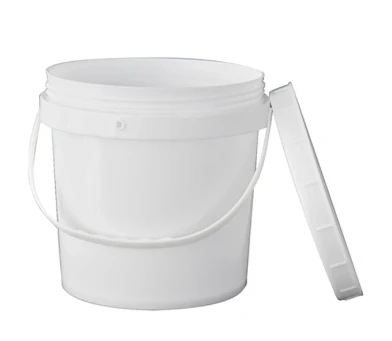
Nominal Capacity Is Not the Same as Filling Volume
When I work on a new bucket project, I separate nominal capacity from the volume that a customer actually plans to fill.
A "2 gallon" label is usually a product size category. It does not mean that every application should use the container up to its maximum internal volume.
For liquid products, I normally leave enough headspace for filling, closing, handling, and temperature changes. This becomes more important when the product is hot filled or moved over long distances.
|
Item I Check |
Why I Check It |
|
Nominal Capacity |
Confirms the general bucket size |
|
Actual Capacity |
Shows the physical maximum volume |
|
Recommended Fill Volume |
Helps plan normal production filling |
|
Top Diameter |
Helps check lids and filling equipment |
|
Bottom Diameter |
Helps check stacking and packing |
|
Overall Height |
Helps check shelves, cartons, and machines |
|
Headspace |
Gives extra room above the product |
I also recommend a real filling test before a large order. I have seen two buckets both sold as 2 gallon containers but with different shapes and different usable filling levels. That difference can affect an existing filling line.
Should I Choose an HDPE or PP 2 Gallon Bucket?
I do not treat PP and HDPE as a simple good-versus-bad choice. I select the material based on the product, temperature, handling conditions, and required bucket stiffness.
I normally consider HDPE for impact resistance, low-temperature use, and frequent handling. I consider PP when the buyer needs a stiffer bucket or better performance at higher temperatures. The final choice still depends on resin grade, bucket design, and actual use conditions.

How I Compare HDPE and PP in Real Projects
HDPE is common in industrial plastic pails. I often use it for applications where the bucket may receive frequent impacts during warehouse movement, delivery, or cold storage.
PP normally feels harder and more rigid. I may consider it when the customer wants stronger wall stiffness or uses the bucket at higher temperatures.
|
Factor |
HDPE |
PP |
|
Impact Resistance |
Usually very good |
Good, but depends on grade |
|
Low-Temperature Use |
Often preferred |
Must be checked carefully |
|
Rigidity |
Moderate |
Usually higher |
|
Higher-Temperature Use |
More limited |
Often better |
|
Common Industrial Use |
Very common |
Common |
|
Food Applications |
Possible with compliant material |
Possible with compliant material |
I never tell a customer that HDPE is automatically food grade or that PP is automatically better. A bucket is a complete package. Resin grade, color masterbatch, additives, lid, gasket, and other components also matter.
For this reason, I ask for application details before confirming material. If the customer plans to store food ingredients, chemicals, powder, paint, or hot-filled products, I may recommend different materials even when the required capacity stays at 2 gallons.
What Type of Lid Should I Use for a 2 Gallon Bucket?
I consider the lid one of the most important parts of a 2 gallon bucket system. A correct bucket with an incorrect lid can still fail during use.
I choose standard lids for basic closure, gasket lids when better sealing is required, and tamper-evident lids when the buyer needs visible evidence of opening. I also confirm that the lid is designed for the exact bucket rim because 2 gallon lids are not always interchangeable.
Standard, Gasket and Tamper-Evident Lids
I often see buyers assume that all 2 gallon pail lids have the same diameter and locking design. I do not make that assumption.
A small difference in the upper rim can affect whether the lid locks correctly. Because of this, I usually treat the bucket, lid, and gasket as one packaging system.
|
Lid Type |
Main Function |
Typical Use |
|
Standard Snap-On Lid |
Basic closure and dust protection |
Dry products and general storage |
|
Gasket Lid |
Better sealing around the bucket opening |
Liquids, powders, moisture-sensitive products |
|
Tamper-Evident Lid |
Shows whether the package has been opened |
Food, ingredients, retail and controlled products |
|
Gasket + Tamper-Evident Lid |
Combines sealing and opening evidence |
Higher-control packaging |
I also separate sealing from tamper evidence. They solve different problems.
A gasket can improve the seal between the lid and the bucket rim. A tamper-evident tear strip helps show whether someone has opened the package.
I also check the closing method during sample testing. Some lids can be pushed down by hand. Other heavy-duty lids may need a rubber mallet or closing equipment to achieve a full fit. I never judge sealing only by looking at whether the lid appears to be closed.
Are 2 Gallon Buckets Suitable for Food, Paint, Powders and Chemicals?
I use 2 gallon buckets across many industries because the size works well for products that need smaller packing units, easier handling, or controlled dispensing.
I commonly consider 2 gallon buckets for food ingredients, powders, paint, coatings, cleaning products, industrial materials, pet products, and other small-batch packaging. I always match the bucket material, lid, gasket, and compliance requirements to the contents before confirming use.
Why the Same Bucket Size Serves Different Industries
When I help customers choose a bucket, I focus on the reason they need the 2 gallon size.
A food ingredient producer may choose it because workers can carry the filled bucket more easily than a 5 gallon pail. The smaller volume can also suit production-line dispensing and batch control.
For powder products, I pay more attention to moisture protection, lid fit, and spill prevention. A gasket lid may be useful when the powder must stay dry during storage.
For paint and coating products, I check the lid seal, handle strength, filled weight, and compatibility with filling equipment.
For industrial raw materials, the main issue may be chemical compatibility. I do not assume that a plastic bucket can hold every chemical simply because it uses HDPE or PP.
The 2 gallon size works especially well for portioning. I often recommend it when the customer needs to divide a bulk material into smaller units for production, distribution, samples, service work, or controlled daily use.
Is a Round or Square 2 Gallon Bucket Better?
I choose bucket shape based on filling, storage, empty-container handling, and transport efficiency. The shape can affect both production and shipping costs.
I normally use round buckets when buyers want a common design, easy empty-bucket nesting, and mature lid options. I consider square buckets when better use of shelf, carton, or pallet space is more important.
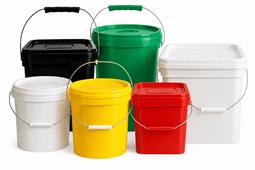
How Shape Changes Storage and Transport
Round pails are common in industrial packaging. Most round bucket bodies have some taper. This allows empty buckets to fit inside one another.
For customers that import large quantities, nested empty buckets can reduce the space needed before filling.
Square buckets have a different advantage. Their straight sides can use storage and transport space more efficiently. The gaps between containers can be smaller when several buckets are packed together.
|
Feature |
Round Bucket |
Square Bucket |
|
Empty Nesting |
Usually very good |
Depends on design |
|
Lid Availability |
Usually wide |
More design-specific |
|
Handling |
Familiar and simple |
Easy to organize |
|
Space Use |
Leaves more gaps |
Better use of rectangular space |
|
Pallet Packing |
Good |
Can be more space efficient |
|
Common Applications |
Food, paint, industrial materials |
Ingredients, food, specialty packaging |
I do not select square buckets only because they appear to save space. I still check handle position, lid design, filling equipment, label area, pallet pattern, and customer handling habits.
How Do I Check Whether a 2 Gallon Bucket Is Food Grade?
I never use the words PP or HDPE alone as proof of food-contact suitability. Material type is only one part of the packaging system.
I confirm the specific resin, additives, colorants, bucket, lid, and gasket when food contact is required. I also check the required food-contact documents for the destination market instead of assuming that every HDPE or PP bucket is suitable for direct food contact.
What I Check for Food Packaging Projects
When a customer tells me that the bucket will hold flour, sauces, ingredients, dough, seasonings, or other food products, I ask for more than a material name.
I want to know whether the content touches the bucket directly. I also check whether the customer needs a natural, white, or colored bucket.
Color matters because the pigments and additives used in the plastic also need to match the required application.
I review the lid and gasket in the same way. A compliant bucket body does not automatically make every lid or rubber seal suitable for food contact.
I normally confirm these points:
Specific resin used for the bucket
Material used for the lid
Color masterbatch and additives
Gasket material when fitted
Required food-contact documentation
Intended food type
Filling temperature
Storage temperature
Direct or indirect food contact
This process gives me much more confidence than simply reading "food grade HDPE" on a product description.
How Should I Test 2 Gallon Buckets Before a Bulk Order?
I use samples to test the complete filled package. An empty bucket that looks strong can still behave differently after filling, stacking, closing, and transport.
I test lid fit, gasket position, handle performance, filled-bucket deformation, stacking, filling equipment, and real product compatibility before a large order. I also test the bucket at the temperature and filled weight that the customer expects to use.
I Test the Bucket Under Real Conditions
I do not consider a sample approved just because the bucket does not crack when I receive it.
First, I close the correct lid several times and check whether the rim locks evenly. If the lid contains a gasket, I check whether the gasket stays in position.
Then I fill the bucket to the customer's expected weight. I lift it by the handle and check whether the handle, attachment points, and bucket rim remain stable.
I also stack filled buckets. I check the lower bucket walls for visible deformation.
For buyers with automatic filling equipment, I confirm bucket dimensions against the machine. A few millimeters can matter when the filling or lid-closing process is automated.
|
Test |
What I Look For |
|
Lid Closing |
Full and even locking |
|
Gasket Check |
Correct position and compression |
|
Filled Handle Test |
Stable carrying under actual weight |
|
Stacking Test |
Limited wall deformation |
|
Drop/Impact Test |
Bucket and lid remain functional |
|
Temperature Test |
Suitable behavior in real storage conditions |
|
Filling Line Test |
Correct fit with production equipment |
|
Product Test |
No unwanted reaction with contents |
I prefer to find these problems during sample approval rather than after thousands of buckets arrive.
What Should I Ask a 2 Gallon Bucket Supplier Before Buying?
I compare suppliers only after I confirm the technical requirements. A low unit price has little value if the bucket does not work with the lid, filling line, product, or shipping conditions.
I ask a 2 gallon bucket supplier about capacity, dimensions, weight, wall thickness, resin, lid type, gasket, handle, stacking, compliance, temperature limits, customization, sample testing, packing, MOQ, and lead time before I compare final prices.
My Bulk Buying Checklist
When I source buckets for a large project, I try to confirm all key details in one specification sheet.
|
Specification |
What I Confirm |
|
Nominal Capacity |
2 gallon |
|
Actual Capacity |
Maximum physical volume |
|
Recommended Fill |
Normal production filling volume |
|
Material |
HDPE or PP and specific grade |
|
Bucket Weight |
Actual empty weight |
|
Wall Thickness |
Target or range |
|
Dimensions |
Top, bottom, and height |
|
Lid Type |
Standard, gasket, tamper-evident |
|
Lid Compatibility |
Exact matching bucket model |
|
Gasket Material |
EPDM, SBR, or other material |
|
Handle |
Plastic or metal |
|
Filled Load |
Target product weight |
|
Stacking |
Empty and filled condition |
|
Temperature |
Hot-fill, room temperature, cold storage |
|
Food Contact |
Required documents when needed |
|
Color |
Standard or customized |
|
Printing |
Logo, label, or other marking |
|
Packing |
Pieces per stack, carton, or pallet |
|
Sample |
Sample availability and testing |
|
MOQ |
Minimum order quantity |
|
Lead Time |
Production schedule |
I pay special attention to lid compatibility, gasket material, wall thickness, and filled-load testing. These details are easy to miss because they are less visible than bucket color or price.
I also ask the supplier to keep the approved sample or specification as the production reference. This can reduce differences between sample approval and bulk production.
Conclusion
I choose a 2 gallon bucket by matching capacity, material, lid, sealing, filled weight, and use conditions first, then I compare supplier pricing and order terms.
About Enlightening Plast
We are Enlightening Plast, a plastic packaging manufacturer in China with more than 20 years of manufacturing experience. We provide plastic packaging solutions for brand owners, wholesalers, distributors, and industrial buyers.
We operate more than 60 injection molding and rotational molding machines. We also assign experienced quality-control staff to our production lines to support stable bulk production.
Our Services
Products: We provide one-stop plastic packaging solutions for industrial and commercial buyers.
Customization: We support custom colors, logos, and molds for qualified projects.
International Certifications: Our available certification and compliance support includes ISO 9001, CE, REACH, RoHS, SGS, FDA, and GRS based on product and project requirements.
Quality Assurance
Raw Material Inspection: We check raw materials and required compliance documents before production.
Controlled Production: We use injection molding, rotational molding, and controlled assembly processes for stable production.
Inspection: We carry out production inspections and final checks based on our quality procedures.
Compliance Support: We can provide relevant product documents according to the specific product, material, and buyer requirement.
Production Capacity
Manufacturing Capacity: We operate more than 60 injection molding and rotational molding machines.
Custom Manufacturing: We develop customized packaging products for distributors, brands, and industrial users.
Flexible Solutions: We adjust materials, colors, logos, structures, and molds based on project requirements.
Global Supply
We supply customers in international markets with plastic packaging products and customized logistics packaging solutions. We focus on stable quality, practical product design, and reliable bulk-order support.
FAQ
Q: Are all 2 gallon bucket lids interchangeable?
A: No. Lid diameter, bucket rim design, and locking structure can vary between manufacturers, so the bucket and lid should be matched as a set.
Q: Which is better for a 2 gallon bucket, HDPE or PP?
A: HDPE offers better impact resistance and performs well at low temperatures, while PP is more rigid and better suited to higher-temperature conditions.
Q: Can a 2 gallon bucket be used for food packaging?
A: Yes, but the resin, additives, lid, gasket, and other components must meet the required food-contact standards.
Q: What is the difference between a gasket lid and a tamper-evident lid?
A: A gasket lid improves sealing, while a tamper-evident lid provides visible evidence if the package has been opened.
Q: Which is better, a round or square 2 gallon bucket?
A: Round buckets are widely used and easy to nest, while square buckets make better use of shelf, carton, and pallet space.
Q: What tests should be done before buying 2 gallon buckets in bulk?
A: I recommend testing lid fit, gasket assembly, handle strength, filled-load performance, stacking, temperature resistance, and compatibility with the filling line.
Q: What information should be confirmed with a 2 gallon bucket supplier?
A: Confirm capacity, dimensions, material, wall thickness, lid type, gasket, handle, compliance, MOQ, packing method, sample availability, and lead time.


