


When sourcing food-grade plastic pails, "food safe" is one of the most overused claims in supplier catalogs - and one of the least verified. Many buyers receive nothing more than a self-declaration, a statement that no independent laboratory has reviewed. In supplier audits and import customs reviews, that gap becomes the buyer's problem to resolve.
Enlightening Plast's 6 gallon pail has been independently tested by SGS-CSTC Standards Technical Services (Shanghai) Co., Ltd., a globally recognized third-party testing body. Report number: SHAEC24014138702. It passed both FDA 21 CFR 177.1520 and EU No.10/2011 - two of the most referenced standards in food contact material compliance. Buyers have a verifiable document, not a marketing claim.
What Does "FDA Compliant" Actually Mean for a Food Grade Pail?
FDA compliance is the result of specific chemical tests - not a label a supplier can self-assign.
Why HDPE - and Why Does the Grade Matter?
Material name alone is never enough to confirm a plastic pail is food-safe.
HDPE (High-Density Polyethylene) is widely used in food contact packaging because of its chemical stability and the absence of BPA (Bisphenol A, a synthetic compound linked to health concerns in food packaging). But HDPE exists in multiple grades, and not every formulation meets food contact requirements. A verified food grade pail is one where the specific formulation has been tested - not just labeled with a material name.
This is precisely why FDA 21 CFR 177.1520 exists: to confirm that a particular HDPE configuration is safe for food contact, rather than relying on the material category as proof.
What the SGS Tests Actually Measured
Three independent tests, all passed - here is what each one checked.
FDA 21 CFR 177.1520 is the U.S. FDA's core compliance standard for food-contact materials made from olefin polymers (polyolefins - plastics derived from ethylene or propylene, including HDPE). SGS completed three tests on this 6 gallon plastic pail, and all three passed:
Density at 23°C - confirms the polymer composition falls within the specified density range at controlled temperature
Extractable fraction - measures the quantity of substances that can be drawn out under defined solvent conditions
Soluble fraction in Xylene - measures how much of the material dissolves in xylene, which reflects the degree of polymer cross-linking
One terminology detail matters here. The U.S. FDA does not use the phrase "FDA Approved" for food-contact plastic - and actively discourages it. The correct language is "compliant with FDA 21 CFR 177.1520." This pail's certification follows that wording precisely, so buyers can use it directly in compliance filings or supplier audit packages without modification. Many suppliers get this wrong, and it creates friction when compliance teams review the paperwork.
For buyers entering the U.S. market, the SGS report can be submitted directly as part of your packaging compliance documentation - no additional testing needed.

Why Does EU No.10/2011 Matter If You're Not Selling to Europe?
EU No.10/2011 is not a regional permit - it is the strictest chemical safety benchmark applied to food contact plastic pails globally.
EU No.10/2011 is not a Europe-only market access requirement. Brand owners in the U.S., the Middle East, and Southeast Asia regularly include it in supplier qualification criteria - not because local regulations require it, but because it represents the upper boundary of chemical safety standards for food contact plastics. Holding this certification signals to procurement teams that the material has been held to the highest available bar.
The core technical difference from the FDA lies in migration testing. FDA 21 CFR 177.1520 verifies the composition of the raw material. EU No.10/2011 goes further and requires measuring how much of that material actually transfers into food under real-use conditions. This is assessed against two limits: the Overall Migration Limit (OML - the maximum total quantity of all substances allowed to migrate from packaging into food) and the Specific Migration Limit (SML - the cap on migration for each individually named substance). Passing both means the pail has been independently verified from two angles: what it is made of, and what it releases.
What makes this certification particularly concrete is the testing method. EU No.10/2011 requires migration testing across multiple food simulants - standardized liquids that replicate different food categories. These include aqueous simulants (representing water-based and acidic foods), alcohol simulants, and fatty food simulants (representing high-fat content products). Passing all simulant categories means this certification covers solid, liquid, acidic, and fatty food contents - not a narrow application type.
When a supplier holds both FDA and EU documentation, it reduces friction in brand owner audits and retailer supplier reviews. Fewer rounds of document requests, faster qualification timelines.

Can You Actually Verify This Report?
Self-declaration and third-party testing are not the same thing - and the difference matters when your compliance files go under review.
Self-Declaration vs. Third-Party Testing
A supplier's internal claim and an independent laboratory's conclusion carry very different weight.
When a supplier declares a product food-grade without third-party testing, that claim has not been reviewed by anyone outside the company. It typically does not hold up in brand owner audits, retailer reviews, or customs inspections - and it is usually the buyer who ends up sourcing additional documentation to fill the gap. For plastic pail manufacturers supplying branded food products, this gap is a recurring issue.
SGS (SGS-CSTC Standards Technical Services (Shanghai) Co., Ltd.) is a globally recognized third-party testing institution, and its reports are accepted by brand owners, procurement teams, and regulatory bodies across markets worldwide. The conclusions are independent - they do not come from the supplier.
How to Verify and Use the Report
Report number SHAEC24014138702 is queryable through SGS official channels.
The original PDF is available on request - no intermediaries required. Buyers can use it directly for internal records or forward it to their brand clients' compliance departments.
A common question: does an SGS report have an expiry date? The report documents the compliance status of a specific formulation and production process. As long as those parameters remain unchanged, the findings stay applicable. If raw material sources or formulation parameters change, retesting is required - and periodic retesting is already part of this manufacturer's quality management cycle.
In practice, this document fits three main workflow scenarios:
Import customs documentation (as a food contact material compliance reference)
Supplier audit packages submitted to brand clients
Retailer supplier qualification dossiers
Buyers receive the PDF and can use it as-is, without further conversion.
Is a 6 Gallon Pail the Right Size for Your Operation?
Capacity is not just a volume figure - it determines how often your production line has to stop.
This pail's key dimensions: approximately 22.7 liters (6 U.S. gallons), HDPE construction, suitable for solid, liquid, and semi-liquid food contents. The 6 gallon pail with lid is the standard configuration, and the SGS certification covers the full product range from 0.15L to 30L - so this is not an isolated compliance result for a single size, but a consistent production standard across the line.
The efficiency case for 6 gallon over 5 gallon comes down to changeover frequency. At roughly 17% greater capacity, buyers packaging pet food, honey, sauces and condiments, dry food ingredients, or nutritional supplement powders will run fewer container changes per production run at the same output volume. That reduction in changeovers means less handling time per unit and lower operational cost over volume. For buyers currently sourcing 5 gallon food grade pail wholesale quantities, the capacity difference is worth factoring into total cost per unit.
The 6 gallon pail dimensions also support logistics efficiency. The tapered body allows empty plastic pails with lids to nest inside each other before filling, reducing storage footprint and inbound freight volume. Once filled and lidded, the pails are stackable, which suits standard warehouse layouts. For importers and distributors handling large volumes, both properties affect landed cost directly.
Does Certification Hold Up Batch After Batch?
An SGS test result is a starting point - consistent quality across orders depends on what happens in the factory every day.
An SGS report captures compliance at a single point in time. But what buyers actually need to know is whether the next shipment will meet the same standard. ISO 9001 Quality Management System certification addresses this directly: it means the production process operates within a structured, audited framework - not just that one sample passed a lab test. SGS material compliance and ISO 9001 process certification work together, and neither one alone is sufficient.
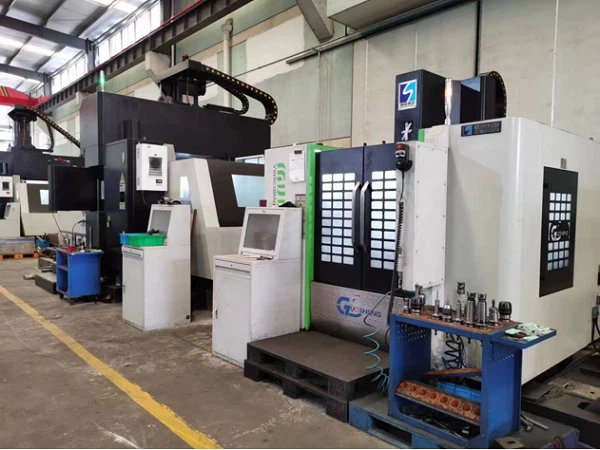
This manufacturer has operated since 2000, with production facilities in Shanghai and Ningbo covering approximately 90,000 square meters, 60 production lines, and 700 injection molds. These figures reflect stable production capacity and process consistency across 6 gallon plastic pails and the broader product range.
For buyers with branded packaging requirements, custom options are available: color selection, logo printing, and lid configurations. MOQ runs from 500 to 1,000 units depending on specification. The manufacturer also produces 6 gallon recyclable plastic pails for buyers with sustainability requirements or markets where recyclability documentation is part of the supplier qualification process.

Request a Sample or Download the Certificate
If you are at the evaluation stage, the most direct next step is to request a free sample - assess the product against your own packaging specs before committing to an order. If compliance documentation is the priority, the SGS certificate PDF is available on request and ready to file or forward to your brand client's compliance team.
All SGS test reports and certification documents are available upon request.


