


A standard 5 gallon bucket of paint covers approximately 1,750–2,000 sq ft in a single coat on a smooth, pre-primed surface.
With two coats, the professional standard, that drops to 875–1,000 sq ft. Coverage is always a range, not a fixed number: surface condition, paint quality, and application method all shift the result.
And here's what most guides miss: the bucket itself affects how much usable paint you actually get.
Why Are Paint Manufacturers Rethinking the 5 Gallon Paint Bucket Now?
New packaging regulations are changing what paint containers need to do.
By 2026, sustainability-driven packaging requirements have become a real compliance pressure for coating brands selling into the US and EU markets.
The EU's updated Packaging and Packaging Waste Regulation (PPWR), which entered into force in 2025 and is being phased in through 2030, sets mandatory recycled content targets and recyclability requirements for industrial packaging including paint containers.
In the US, several states have expanded Extended Producer Responsibility (EPR) programs that hold manufacturers accountable for the end-of-life handling of their packaging.
These requirements are pushing coating brands to rethink their container choices.
A steel pail with an epoxy or phenolic liner scores poorly on recyclability metrics and carries a higher carbon footprint per unit. HDPE (high-density polyethylene) and PP (polypropylene) buckets, by contrast, can incorporate PCR (post-consumer recycled) content and meet recyclability thresholds more easily, which is why more brands are actively switching.
The formulation shift matters too. The industry's ongoing move toward water-based coatings and low-VOC formulations changes what a container needs to handle chemically. Solvent-based paints need a lined steel pail to resist corrosion. Water-based paints work fine in an unlined HDPE bucket, with no extra treatment required. As formulations change, the container that made sense five years ago may no longer be the right fit.
Why Is Coverage Never a Fixed Number?
Most people assume the number on the label is what they'll get in practice, but that's rarely how it works.
The 350–400 sq ft per gallon printed on most paint cans assumes a smooth surface, a pre-primed substrate, and roller application. Change any one of those conditions, and the number changes too. Four variables drive actual coverage: surface condition, paint quality, application method, and number of coats.
Does Surface Condition and Application Method Change How Far the Paint Goes?
Where and how you apply paint matters as much as which paint you choose.
Smooth, pre-primed drywall is the baseline for label claims. On textured or rough surfaces such as brick, stucco, or textured drywall, coverage drops by 30–50%. That means a 5 gallon bucket covering 1,750–2,000 sq ft on smooth walls may only reach 1,000–1,200 sq ft on a rough surface in a single coat. Bare porous substrates like unpainted concrete or raw timber absorb even more, compressing coverage further.
Two coats is the professional standard for most interior and exterior projects, which cuts usable coverage to 875–1,000 sq ft per 5 gallon bucket.
Spray application adds another layer of loss: overspray typically wastes 20–30% more paint than roller application, and at production scale that difference compounds into a meaningful cost variable.
One practical detail often overlooked when painting from a 5 gallon bucket with a roller: using a paint grid (a mesh insert that hooks over the bucket rim and scrapes excess paint off the roller) reduces overloading and minimizes waste. It's standard practice among professional crews but frequently skipped by end users, and it makes a measurable difference in how far a bucket goes.
Does Paint Quality Affect How Far One Bucket Goes?
Higher solids content means more coverage per dollar, even if the upfront cost is higher.
Solids content is the key metric here. It measures what percentage of the paint formulation actually stays on the wall after drying. A higher-solids paint covers the same area with less material and in many cases eliminates the need for a third coat. Lower-cost paints with lower solids content often require an extra coat, and the total paint volume used across three coats frequently exceeds what two coats of a higher-quality product would consume.
For manufacturers labeling coverage data on product packaging, solids content is the most defensible technical basis for any coverage claim. At retail, a 5 gallon bucket of paint ranges from approximately USD 20 to 80 depending on formulation quality, but a higher-solids product at USD 60 per bucket often delivers a lower cost per square foot than a USD 30 option that requires an extra coat.
Steel Pail or 5 Gallon Plastic Bucket - Which Delivers More Usable Paint?
The container isn't just packaging. It directly affects how much paint actually reaches the wall.
The nominal 5 gallon (18.9 L) figure is a labeled volume, not a guaranteed usable yield. Latex paint has a density of approximately 1.3–1.4 kg/L, so a full 5 gallon bucket holds roughly 24–26 kg (53–57 lb) of paint.
Add the empty bucket weight, and a loaded steel pail reaches approximately 29–32 kg (64–70 lb), while an HDPE bucket comes in at around 25–27 kg (55–60 lb). That gap adds up to 80–100 kg per pallet at 20 buckets per pallet, which has a real impact on freight cost.
Beyond weight, internal geometry matters. Steel pails with epoxy or phenolic liners leave measurable residue in corners, particularly with high-viscosity coatings. HDPE buckets have smooth, radiused interior walls with no corners to trap paint, which means a higher net yield from the same labeled volume. Round buckets work better with automated filling lines and mixing equipment; square pails improve pallet utilization and reduce shipping footprint.

When Does a Steel 5 Gallon Metal Bucket Make Sense?
Steel pails still have a clear role, but it's narrowing as formulations shift.
Solvent-based paints and alkyd coatings (a resin-based paint type that uses oil as a carrier and requires strong solvent resistance from its container) require the structural resistance that steel provides.
Liner treatment must match the paint chemistry: phenolic liners for acid-type products, epoxy liners for alkaline ones, and this adds both cost and process complexity at the manufacturing stage.
Steel's practical limitations are straightforward: heavier per unit, higher freight cost, and corner residue that reduces usable paint yield.
The removable top design common in most steel pails is convenient for on-site access but offers weaker secondary sealing after the first opening, which matters for products with longer shelf-life requirements.
Why Are Low-VOC Brands Switching to 5 Gallon Plastic Buckets?
HDPE and PP buckets are a better fit for where the coatings industry is heading.
HDPE is chemically inert and naturally compatible with water-based and low-VOC formulations, with no liner needed, lower material cost, and approximately one-third the weight of an equivalent steel pail.
For bulk sea freight, that weight reduction translates directly into lower shipping cost per unit. PP (polypropylene) buckets handle hot-fill processes up to approximately 135°C, compared to HDPE's upper limit of around 80°C, and that temperature threshold is the clearest practical dividing line between the two materials.
Both HDPE and PP can incorporate PCR (post-consumer recycled) content, supporting the ESG (Environmental, Social, and Governance) packaging commitments increasingly required by European and North American coating brands. Some retail buyers now list documented recycled content as a supplier qualification criterion, not just a preference.
Steel vs. HDPE vs. PP - Which Bucket Fits Your Coating?
Container selection follows formulation chemistry, not price preference.
The right bucket starts with the paint's chemical profile, filling temperature, and the compliance requirements of the destination market. Here's how the three main options compare:
| Dimension | Steel Pail | HDPE Bucket | PP Bucket |
|---|---|---|---|
| Compatible paint types | Solvent-based, alkyd | Water-based, latex, low-VOC | Hot-fill specialty coatings |
| Interior treatment | Epoxy or phenolic liner required | None, chemically inert | None, heat-resistant |
| Usable volume efficiency | Moderate (liner + corner residue) | Higher (smooth radiused walls) | Higher |
| Empty bucket weight | ~1.5–2 kg | ~0.5–0.8 kg | ~0.5–0.8 kg |
| Hot-fill tolerance | Yes | Not above 80°C | Up to ~135°C |
| Recyclability / ESG | Recyclable; high energy input | Recyclable; PCR-compatible | Recyclable; PCR-compatible |
| UN hazardous goods cert | Widely established | Available; confirm spec | Available; confirm spec |
Ongoing regulatory pressure on VOC emissions and packaging sustainability is driving structural growth in water-based coating volumes, and HDPE buckets are the direct beneficiary. The decision sequence is straightforward: confirm the formulation type first, match the container material to that chemistry, then evaluate logistics costs and certification requirements.
One detail worth flagging: if a specific formulation requires an interior barrier even within an HDPE bucket, a 5 gallon bucket liner (an additional layer inserted for secondary chemical separation), that specification must be agreed with the supplier at the design stage, not after production has started.
What Should Paint Manufacturers Check Before Sourcing in Bulk?
Getting the material right is step one, but there are procurement details that trip up even experienced buyers.
How Do You Confirm Chemical Compatibility?
A test report is what you need, not a supplier's verbal confirmation.
Suppliers should provide chemical compatibility test reports based on ASTM or ISO standards. The report should confirm that the bucket material stays stable when in contact with the specific formulation under normal storage conditions.
For 5 gallon paint buckets with lids, closure design matters equally: tight-head pails (fixed sealed lid) are required for UN-rated hazardous goods transport and are standard for solvent-based coatings shipped internationally. Open-head pails (removable lid) are more common in retail settings but offer weaker secondary sealing after the first opening. Procurement teams should specify the closure type before ordering, as it affects both shipping compliance and end-user experience.
Certification requirements vary by destination market. Key documents to request: FDA compliance (US market), RoHS (EU restriction of hazardous substances), and ISO 9001 as a baseline quality systems credential.
Factory Direct or Distributor - What Actually Matters?
For production-scale buyers, consistency matters more than unit price.
Factory-direct sourcing ensures mold consistency and dimensional tolerance stability, both critical for manufacturers running automated filling lines where bucket-to-bucket variation causes downtime. Distributors may pull stock from multiple production batches, introducing wall thickness and geometry variation that creates fit issues on filling equipment. Verifying lead time and MOQ (minimum order quantity) against your actual production schedule is essential before committing to any supplier.
Square pails improve pallet utilization by approximately 15–20% compared to round pails, a difference that translates directly into lower freight cost per unit on wholesale 5 gallon bucket ocean shipments. And one final specification to confirm in writing before any order is placed: hot-fill temperature. Any filling process above 80°C requires PP, not HDPE, and whether standard stock is available or custom mold tooling is needed will significantly affect your lead time.
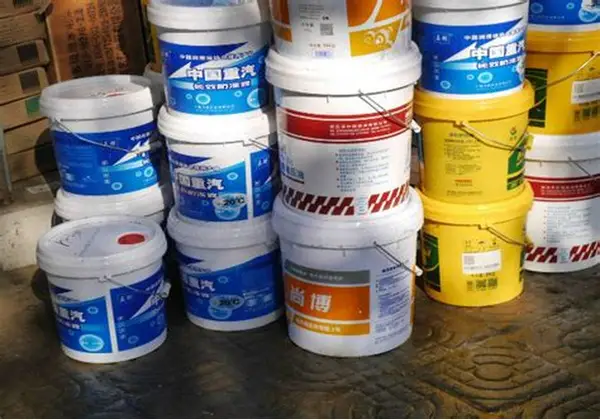
Conclusion
The coverage you get from a 5 gallon paint bucket comes down to four things: the paint formula, the surface, how it's applied, and the container holding it. If you're a coating brand or procurement buyer sourcing containers at scale, the bucket choice affects more than yield. It affects freight cost, compliance documentation, and whether your filling line runs smoothly.
If you're comparing 5 gallon plastic buckets from different suppliers, the material spec sheet and compatibility test report are the two documents that matter most. Get those right, and the rest of the sourcing decision becomes straightforward.
Explore our range of HDPE 5 gallon buckets and PP alternatives, or contact us directly to request material documentation and a factory-direct quote.
FAQ
How much will a 5 gallon bucket of paint cover?
On a smooth, pre-primed surface with a single coat, a 5 gallon bucket covers approximately 1,750–2,000 sq ft. With two coats, effective coverage drops to 875–1,000 sq ft.
How much does a 5 gallon bucket of paint cover with two coats?
Two coats reduce usable coverage to approximately 875–1,000 sq ft per 5 gallon bucket, which is the professional standard for most interior and exterior applications.
How much does a 5 gallon paint bucket cover on textured surfaces?
On textured or rough surfaces such as brick or stucco, coverage can drop 30–50%, resulting in approximately 1,000–1,200 sq ft per bucket in a single coat.
How much paint does a 5 gallon bucket cover for exterior walls?
Exterior walls, which are often textured or weathered, typically yield 1,000–1,500 sq ft per 5 gallon bucket depending on surface condition and number of coats.
How much does a 5 gallon bucket of paint weigh?
A full 5 gallon bucket of latex paint weighs approximately 24–26 kg (53–57 lb) in paint alone. With the container, a loaded steel pail reaches 29–32 kg and an HDPE bucket approximately 25–27 kg.
How much is a 5 gallon bucket of paint?
Retail prices typically range from USD 20 to 80 depending on formulation quality. Higher-solids products often cost less per square foot despite a higher upfront price.


