


In industrial packaging, the plastic bucket looks simple-but the material behind it determines everything from safety to cost. A bucket made from the wrong resin can crack in transport, deform during filling, or fail a food safety inspection. That's why understanding how HDPE, PP, and even PVC perform under different conditions is essential before making any bulk purchase.
For buyers, engineers, and private label brands, choosing the right bucket material isn't just a technical decision-it's a business one. The type of resin affects not only durability but also recyclability, labeling, and export compliance.
This guide explains how each material behaves in real-world use and how manufacturing quality, mold design, and supplier reliability work together to define your final product's performance.
Let's start with the most common materials used in plastic bucket production.
What Are the Most Common Materials Used for Plastic Buckets?
When choosing plastic buckets for business use, the material decides everything - durability, cost, and safety. The three most common options are HDPE, PP, and PVC, and each fits a different type of work.
HDPE: Why It's a Top Choice for Heavy-Duty Plastic Buckets
HDPE (High-Density Polyethylene) is the strongest and most reliable material for heavy-duty use.
It can handle rough transport, stacking, and chemical storage without cracking or leaking. It stays firm in cold weather and doesn't deform easily under load.
HDPE is safe for food when made from virgin resin and is fully recyclable. Because it resists acid, oil, and impact, most HDPE bucket suppliers recommend it for paint, fertilizer, food, or industrial chemicals. It is the best balance of strength, safety, and value.
PP: Lightweight and Heat-Resistant Plastic for Everyday Use
PP (Polypropylene) is lighter than HDPE and works better in high-temperature filling or storage.
It keeps its shape even when used for hot products like sauces or creams. It's smooth, clean-looking, and approved for food contact.
Many buyers choose PP plastic pails when they need buckets for food packaging, retail use, or warehouse storage. PP is cheaper to produce and easier to customize, but it's less resistant to strong impact or harsh chemicals than HDPE.
Are PVC and Other Non-Food-Grade Materials Worth Using?
Some low-cost buckets use PVC or recycled mixed plastic. They save money but are not food-safe and can break or warp under heat. PVC buckets are fine for short-term industrial use, like carrying water or construction materials, but not for food or long-term packaging.
If your products need safety and long-lasting quality, it's smarter to stay with HDPE or PP. These materials meet global standards and help protect your brand reputation.
| Material | Density | Heat Resistance | Chemical Resistance | Food Contact Safe | Application Examples |
|---|---|---|---|---|---|
| HDPE | High | –40°C to 70°C | Excellent | Yes (Virgin) | Paints, fertilizers, food, chemicals |
| PP | Medium | Up to 100°C | Moderate | Yes | Hot-fill foods, sauces, yogurt |
| PVC / Recycled | Variable | < 60°C | Low–Moderate | No | Non-food industrial use |

How Do HDPE and PP Buckets Differ in Performance?
HDPE and PP may look similar, but they behave very differently in real-world use. Here's how they compare in strength, safety, production, and sourcing.
Durability, Chemical Resistance, and Temperature Tolerance
When buckets are moved, dropped, or stacked, performance matters more than specs on paper.
HDPE is much tougher under stress. It resists cracking and impact, even in cold storage or outdoor use. This is why many buyers choose HDPE bucket suppliers for chemicals, paint, or transport packaging.
PP is more flexible and holds up well in hot filling conditions. However, it's easier to dent or deform under pressure. For fragile contents or fast-moving warehouse operations, HDPE usually holds shape better.
Both materials can handle light chemicals, but HDPE offers stronger resistance to acids, oils, and solvents. If your product is sensitive or corrosive, HDPE will give you fewer problems in the long run.
Food Contact Safety and Regulatory Compliance
For food, cosmetics, or pharmaceuticals, safety isn't optional-it's mandatory.
Both HDPE and PP can meet FDA, EU, or Halal standards if you use virgin resin. Many food safe plastic pails are made from either material, depending on whether heat or cold storage is more important.
HDPE is often used for frozen foods or oil packaging. PP is common in dairy, snacks, and hot-filled sauces.
To meet regulatory audits, your supplier should provide documents like MSDS, COA, and migration test reports. That's part of what separates a general factory from a true export-ready manufacturer.
Cost Efficiency and Moldability in Production
If you're buying in bulk, material cost and production speed will affect your margins.
PP has a lower melting point than HDPE, which means it uses less energy and allows shorter cycle times during injection molding. That also makes it suitable for thin-wall molding and precision packaging at high volumes.
Because of this, PP is often used for small-volume packaging buckets ranging from 0.1L to 10L. Thin-wall food containers are common in bubble tea shops, salad bars, and sauce packaging, where branding, transparency, and fast turnover are key.
HDPE takes more energy and longer cooling, but it offers higher strength, making it better for buckets between 10L and 30L. These are typically used for industrial paints, cleaning liquids, automotive oils, or agricultural fertilizers-all cases where stacking strength and load-bearing capacity matter most.
Both materials can work well with automation, as long as the mold design is optimized.

What Role Do Resin Grades and Raw Material Sources Play?
Not all HDPE or PP buckets are made equal. The resin grade matters.
Virgin HDPE or PP offers better strength, color consistency, and food safety than recycled blends. If you see buckets cracking easily or changing color over time, it's often due to low-grade regrind material.
Take PP K8303 as an example. It's a food-grade polypropylene known for its high clarity, low odor, and stable surface finish. It doesn't leach oil or lose gloss, even after hot filling. That makes it ideal for retail buckets used in margarine, ice cream, or dry food packaging.
Another trusted grade is HDPE 5502, often used in impact-resistant buckets. It offers strong rigidity with excellent chemical resistance, making it suitable for bulk containers that handle oils, detergents, or construction materials. It also molds well with thicker walls, helping buckets stay intact during drops or stacking.
Always ask your supplier what resin grade they use-and whether it comes with a COA or food contact declaration. A better raw material won't just make a stronger bucket. It helps avoid damage claims, customer complaints, and brand risks later on.
Understanding the Manufacturing Process Behind Plastic Buckets
If you're sourcing plastic buckets at scale, knowing how they're made helps you evaluate quality, speed, and consistency. Here's what a reliable supplier should offer.
Injection Molding: From Raw Resin to Finished Bucket
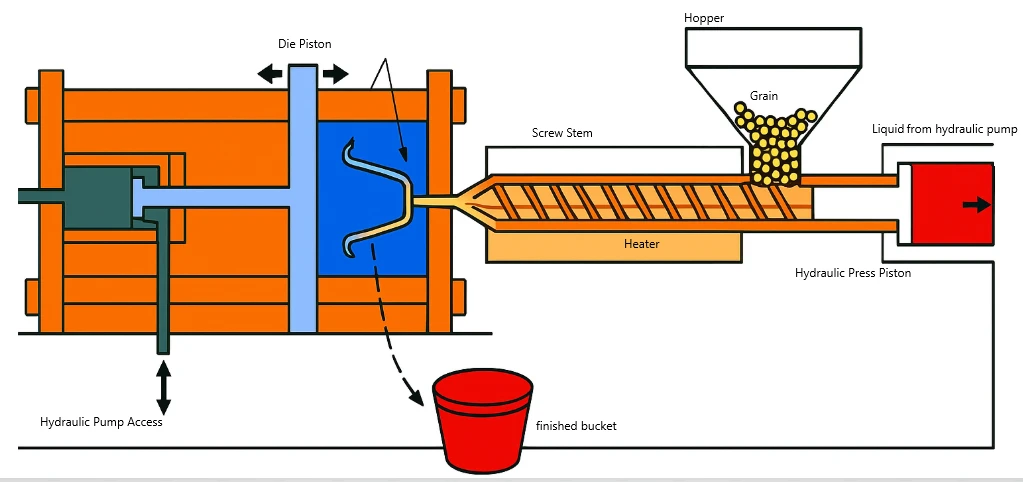
The entire production process starts with injection molding, which shapes each bucket in a single cycle.
HDPE or PP resin is heated, injected into a precision mold, then cooled and ejected within seconds. Most plastic bucket injection molding lines run at high speed, often producing a 20L bucket every 15 seconds.
Key to this process is keeping temperature, pressure, and cooling time stable-this reduces shrinkage, warping, or stress marks. Fast-cycle molding machines allow for better consistency and lower cost per unit in high-volume orders.
Why Mold Design and Equipment Quality Matter
You can't get a good bucket without a good mold.
Our factory uses over 1,000 custom molds across 5L, 10L, 20L, and 30L capacities. Each mold is designed with optimized cooling channels and balanced injection points to ensure even wall thickness and smooth finishes.
High-speed machines (500T–680T) and 3-axis robots support high-cycle production while reducing defects. For your brand, this means better lid fit, stronger stacking performance, and fewer quality issues in the field.
Quality Control Measures That Protect Your Brand
Every production batch is tested to ensure that buckets meet structural and visual standards.
We measure wall thickness, lid tightness, and dimensional accuracy. Drop tests and leak tests simulate transport and storage stress.
For food or pharma clients, we also offer full material traceability and third-party certification support. Our QC team works alongside the production line-not just after it-to catch problems early and protect your brand image.
What Customization Options Are Available for Plastic Buckets?
You don't just need buckets-you need buckets that match your product, brand, and supply chain.
We offer OEM services, including custom logo plastic pail embossing, screen printing, and full-color IML plastic bucket labeling. Buckets can be produced in white, transparent, or custom Pantone colors.
Handles, lids, and sealing options are fully customizable. For example, you can choose tamper-evident lids, pull rings, or vented caps depending on your product needs.
Are Plastic Buckets Compatible with Automated Systems?
If you're running automatic filling or labeling lines, bucket design matters.
Our buckets are developed with automation in mind-uniform rim thickness, reinforced corners, and stable stacking bases make them suitable for buckets for automatic filling lines, labeling arms, and palletizing robots.
We can also adjust mold designs or add positioning features upon request. For high-throughput production environments, this can reduce jamming and improve packing speed.
What Should Buyers Consider When Sourcing Plastic Buckets?
Choosing the right bucket is just one part. Choosing the right supplier is what keeps your business running smoothly. Here are five things you should not overlook.
Choose Materials Based on Application Scenarios
When sourcing plastic buckets in bulk, don't just compare prices or appearance. Always align your material choice with three key factors: product contents, filling method, and storage or shipping conditions.
Product Contents
The chemical nature and consistency of your product matter.
- Acidic or alkaline liquids require HDPE for its superior chemical resistance.
- Food and dairy products are better suited for PP due to their food-grade safety and clarity.
- For granules or powder, both materials are viable, but you'll need to assess weight and required strength.
Filling Method
Different production lines place different stress on the material.
- Hot filling (e.g., for syrups or tea concentrates) needs PP, which withstands higher temperatures.
- Ambient-temperature filling works with both HDPE and PP; what matters more is the bucket's thickness and production speed.
- Automated filling lines require dimensional stability-HDPE typically performs better in stacking alignment and neck tolerances.
Storage and Shipping Conditions
Your logistics plan influences structural needs.
- For long-term stacking, export shipping, or cold chain storage, HDPE is preferred thanks to its rigidity, drop resistance, and low-temperature durability.
- For short-distance or lightweight distribution, PP thin-wall buckets are more cost-effective and reduce freight load.
A professional plastic bucket supplier should walk you through these scenarios-not just offer what's on hand. Matching materials to actual usage helps avoid product failures and keeps long-term costs under control.

How to Evaluate a Reliable Plastic Bucket Supplier?
It's easy to get a price quote. But reliability is what matters most in long-term supply.
Check if the supplier owns its own mold and injection facilities. That means faster turnaround and better control over quality. Ask how many injection lines they run, whether they handle exports directly, and what tests are done before shipping.
A true partner won't just show you catalogs. They'll offer workable lead times, clear specs, and stable packaging solutions-even during peak seasons.
What Export and Compliance Issues Should You Prepare For?
If you're importing plastic buckets, documentation and packaging matter just as much as the product.
Look for plastic bucket exporters who provide FDA, REACH, or food-contact reports if needed. Pallet packaging, container loading height, and stacking design should match the warehouse or retailer's requirements in your country.
Also confirm HS codes, labeling language, and whether the packaging includes product traceability. A good supplier helps prevent customs delays or regulatory rejections before they happen.
What's the Minimum Order Quantity and Lead Time?
MOQ can vary by size, design, and printing.
Standard MOQ is around 500pcs per model. Some OEM plastic bucket suppliers accept lower quantities for trial runs, especially for common sizes like 5L or 20L.
For plain stock items, delivery is usually 5–10 days. For printed, labeled, or customized buckets, lead time is 10–20 days, depending on the mold and material. If you need a sample to confirm compatibility, ask upfront whether the supplier supports small-batch pilot orders.
Do They Support Trial Orders, Mixed Loading, and Third-Party Inspection?
Many global buyers start with a trial container to test the product quality and shipping service.
Ask if the supplier allows mixing multiple models in one 20ft or 40ft container. This saves cost and makes sampling easier.
If your company requires a third-party inspection before shipment, confirm the supplier's workflow. Most professional factories allow on-site inspection and offer packing photos, measurement sheets, and QC reports before delivery.
For new buyers or large orders, these options reduce risk and make onboarding smoother.
Are HDPE and PP Materials Environmentally Friendly?
Choosing the right plastic isn't just about performance-it also involves understanding recyclability, material grade, and long-term environmental impact.
Recycling Codes and Material Identification
Understanding material codes helps ensure compliance and traceability. Most plastic buckets use either HDPE (code 2) or PP (code 5), both widely recyclable in most global markets.
HDPE (High-Density Polyethylene) is often used for industrial containers, oil drums, and food-grade buckets. Its chemical structure allows it to be recycled multiple times without major performance loss. PP (Polypropylene) is lighter, often used for thin-wall food containers, yogurt tubs, and dry product packaging, and is also recyclable under standard protocols.
Buckets made from mixed materials or with full-body stickers may reduce recycling efficiency. As a professional PP and HDPE plastic bucket supplier, we recommend using clear labeling and minimal printing for improved recyclability.

How Responsible Manufacturers Approach Recyclable Production
In today's plastic packaging industry, leading factories are not only switching to virgin HDPE and food-grade PP but are also exploring safe use of PCR (post-consumer recycled) materials-especially for non-food-grade containers.
A growing number of suppliers now redesign molds to reduce material usage per unit and upgrade cooling systems to lower energy demand per injection cycle. Internally recycled waste-such as runners and rejected parts-is often reprocessed directly on-site to reduce environmental burden.
Such practices, aligned with ISO 14001 environmental standards, help balance performance with sustainability, especially when exporting to regions with strict compliance requirements.
Where Is Sustainable Bucket Packaging Heading?
Demand for low-carbon plastic buckets is rising fast-especially in paint, coatings, and food sectors where sustainability certifications are required.
Two trends are shaping the future:
- PCR Buckets: Replacing part of virgin resin with recycled HDPE or PP. Ideal for non-food applications like lubricants or construction chemicals.
- Lightweighting: Reducing plastic weight without sacrificing strength. This cuts transport emissions and raw material usage.
Biodegradable plastics are still limited in industrial bucket use due to strength, cost, and shelf-life concerns. But ongoing R&D in additives, labeling, and circular logistics is moving the market toward better compliance with ESG goals.
How Do Plastic Bucket Design Features Affect Usability and Safety?
When buckets are used for storage, transport, or retail, design is more than just a matter of aesthetics-it directly affects operational efficiency and product protection.
Bucket Lid Options and Sealing Mechanisms
Even a small leak or compromised seal can lead to costly losses in logistics or shelf life.
The right lid design depends on what the bucket holds and where it goes. A snap-on lid is common for dry goods or paints, offering fast access and resealability. A tamper-evident lid includes a tear-off strip to show whether the bucket has been opened-especially useful in food, ink, or chemical industries. For liquids, gasketed lids provide tight sealing under compression, often required for spill-sensitive or high-viscosity contents.
If you use automated filling or high-speed production, the choice of lid must also match your sealing equipment, or it can affect efficiency.
Handle and Grip Design Considerations
The handle may seem minor, but it directly impacts load safety and end-user comfort.
Buckets from a reliable plastic bucket supplier in China typically offer reinforced handles molded with the body or with added metal inserts. For industrial uses, grip stress points must be tested to avoid breakage during lifting or stacking. Retail or consumer-facing designs favor rounded grips, ergonomic angles, and sometimes foldable handles that improve appearance and shelf storage.
Longer buckets with high fill weights also benefit from dual-handle setups or side-hold indents to improve control when pouring.
Round vs. Square Plastic Buckets: Which Works Better?
Choosing between a plastic round bucket and a square one isn't just about preference-it affects every step from storage to loading.
Round buckets are easy to carry, seal well, and reduce internal pressure under liquid fill. They're commonly used in the paint, ink, and dairy sectors.
But they waste space on pallets. Square plastic buckets, by contrast, maximize space utilization and nest neatly in warehouses or shipping containers. This makes them a popular choice for food processing plants, condiment manufacturers, and cleaning chemical distributors.
However, square buckets are more prone to corner cracking if not made with reinforced ribs or thickened corners. Reputable square plastic bucket factories often add base support and corner strength to solve this issue.
For a more in-depth comparison of round vs. square plastic buckets, please refer to our dedicated article on this topic:
https://www.cnplasticbuckets.com/news/round-vs-square-buckets-which-shape-works-be-85182428.html

Need Help Choosing Between HDPE and PP Buckets?
When it comes to bulk plastic bucket sourcing, choosing the right material-HDPE or PP-is not just about cost. It's about load safety, food compliance, shelf life, and transport risks. And often, one wrong decision can lead to hidden losses in packaging, storage, or even leakage claims.
That's why many industrial buyers, importers, and private label brands work with suppliers who understand how materials behave across use cases-from hot-fill sauces to heavy-duty coatings.
If you're still unsure which plastic bucket material fits your product, packing line, or export channel, we're here to help. Our team works with your specs, use conditions, and budget to suggest models that avoid overengineering and cut excess costs-without compromising safety.
Contact us now to get expert advice and a tailored quote based on your actual use-not just what's in stock.


