


How Many Quarts Are In A 5 Gallon Bucket?
A 5 gallon bucket holds exactly 20 quarts by international standard (1 gallon = 4 quarts). This conversion applies universally across industries-from construction paint to food processing to chemical distribution. Understanding this basic math helps businesses communicate with suppliers, calculate fill rates, and manage inventory across different markets.
For procurement managers, the critical answer is: a 5 gallon plastic bucket contains 20 quarts mathematically. Yet "brimful capacity" differs from "working capacity." Most B2B filling protocols leave 5-10% headspace to prevent leaks during transport and thermal expansion. Always confirm whether suppliers quote nominal or usable volume.
However, confusing gallons with quarts in procurement documents causes serious problems. A purchasing manager who orders "20 units" thinking in quarts but writes "gallons" receives four times the intended volume-resulting in overstock, storage issues, and tied-up capital. Conversely, underordering due to unit confusion leads to production delays when materials run out mid-batch.
This guide explains when to use each unit, how different materials affect container selection, and what quality factors matter when sourcing bulk containers.
Why Do Businesses Need Accurate Gallon-to-Quart Conversions?
Unit confusion in industrial settings creates expensive chain reactions. A distributor who mislabels container capacity faces returned shipments, damaged customer relationships, and potential regulatory violations.
For industries handling chemicals or food products, volume errors violate safety standards or cause batch contamination. Production line shutdowns from incorrect fill calculations cost manufacturers significant losses in output and wasted labor.
What Happens When Production Teams Miscalculate Fill Rates?
Production facilities operate on tight schedules. When purchasing teams order "200 units of 5 gallon buckets with lids" but production calculates fill rates in quarts, the disconnect creates problems.
A paint manufacturer expecting 20 quarts per container might overfill if specifications aren't clarified, leading to spills during capping-each spill wastes product and requires cleanup time.
Underfilling reduces product value and damages customer trust. Over a production run of thousands of units, these errors compound into major financial losses.
How Do Volume Errors Increase Shipping Expenses?
Logistics calculations based on incorrect volume assessments lead to wasted pallet space or overweight violations.
Container shipping operates on precise cubic measurements-miscalculating your 5 gallon bucket dimensions compounds across thousands of units, resulting in extra freight charges or rejected loads at customs.
A full container holds approximately 3,600 five-gallon buckets on standard pallets. Volume miscalculations mean you might only fit fewer units, wasting valuable shipping space.
Can Mislabeling Risk Your Certifications?
The FDA requires strict accuracy for food-grade containers.
A supplier who misrepresents a 5 gallon food grade bucket capacity risks your certification status during audits-failures can result in re-inspection fees and potential product recalls.
Chemical manufacturers face similar scrutiny. UN hazardous material regulations demand exact volume declarations for transport documentation.
Incorrect declarations void insurance coverage in case of spills during transit, exposing your company to significant liability.
Which Industries Use 5 Gallon Buckets in Gallons vs. Quarts?
Different industries have different measurement habits. Understanding which sectors use which units prevents ordering confusion and improves communication with suppliers and customers.
US construction, agricultural chemicals, and industrial coatings predominantly use gallon measurements. Automotive lubricants, specialty additives, and laboratory reagents typically specify quarts. Matching your supplier's units to your industry standard prevents ordering mistakes.
Why Does Construction Always Specify Gallons?
The construction materials sector-primers, sealants, joint compounds-operates almost exclusively in gallon terminology across North America. A contractor ordering "5 gallon paint buckets" expects that exact nomenclature on labels and invoices.
This industry convention stems from historical standardization and tool compatibility. Paint mixers calibrate for gallon increments, not quart fractions. Clear unit labeling ensures repeat orders match previous specifications exactly.
When Do Automotive Shops Prefer Quarts?
Automotive and marine industries frequently work in quart measurements. Engine oil, transmission fluid, and hydraulic additives are formulated and sold in quart units because technicians perform precise top-offs rather than bulk applications.
A mechanic adding "2 quarts of synthetic oil" needs that exact measurement-gallon fractions create confusion and potential over-application that damages engines.
Auto parts distributors stock thousands of quart-sized containers, making accurate unit identification critical for inventory management systems.
How Do Farms Use Both Measurements?
The agricultural sector shows divided usage. Bulk pesticides and fertilizers use gallon measurements for field application equipment calibrated in gallons-per-acre. However, concentrated additives and soil amendments often specify quarts to prevent over-application of potent chemicals.
When sourcing empty 5 gallon buckets for agricultural distributors, offer dual-unit labeling to serve both application types.
Agricultural cooperatives often service both large-scale farms (gallon users) and small specialty operations (quart users), requiring flexible labeling options.

When Should You Use Liters or Ounces Instead?
International procurement requires fluency in metric and imperial systems. Missing this detail complicates export documentation and confuses international buyers.
Liters dominate international trade (1 gallon = 3.785 liters, 1 quart = 0.946 liters). Pharmaceutical and cosmetic sectors use fluid ounces for concentrates and additives. Export-oriented businesses must provide containers with dual-unit labeling to serve global markets efficiently.
Why Do Export Markets Require Metric Labels?
The metric system's universal adoption outside North America makes liter-based specifications standard for export products. European buyers ordering containers will request "18.9 liter buckets" rather than "5 gallon" specifications.
Suppliers who only provide imperial-unit labels face customs delays and additional labeling costs. Offering metric-labeled white 5 gallon buckets expands your market reach and simplifies international documentation.
Common Volume Units by Region and Industry
| Volume Unit | Equivalent (5 Gal) | Primary Regions | Common Industries |
|---|---|---|---|
| Gallons (US) | 5.00 gal | USA, Caribbean | Construction, Paint, Agriculture |
| Quarts (US) | 20 qt | USA, Canada | Automotive, Specialty Chemicals |
| Liters | 18.93 L | EU, Asia, South America | Export Products, Pharmaceuticals |
| Fluid Ounces | 640 fl oz | Global (small volume) | Cosmetics, Concentrates, Lab Use |
When Do Industries Measure in Fluid Ounces?
Pharmaceutical and cosmetic industries operate in fluid ounces regardless of geography. A black 5 gallon bucket holds 640 fluid ounces-critical for manufacturers who add precise amounts of active ingredients.
A cosmetics producer adding 16 fl oz of fragrance concentrate to a base formula needs containers marked in ounces for quality control.
Lab technicians working with research chemicals measure in ounces down to precise amounts-gallon or quart markings are too coarse for their applications.
Do Different Materials Affect the 5 Gallon Bucket Quart Conversion?
A common misconception among new procurement staff: different liquids somehow change the conversion math. The volume stays the same, but weight varies significantly.
Five gallons of any material equals 20 quarts by volume. However, 5 gallons of water weighs approximately 42 pounds, while a 5 gallon bucket of paint weighs 50-60 pounds depending on density. Never confuse volume capacity with weight capacity when specifying container requirements.
Does Water Weigh the Same as Paint?
The confusion arises because buyers often think about "how much" a container holds in terms of weight.
A 5 gallon plastic bucket filled with water, latex paint, motor oil, or honey contains the same volume (20 quarts, 18.9 liters) but vastly different masses. Water weighs roughly 42 pounds at standard temperature. Latex paint ranges from 50-60 pounds due to higher density from pigments and resins. Motor oil comes in lighter at 37 pounds, while honey can reach 60 pounds.
A purchasing manager who assumes "5 gallons equals 50 pounds" makes dangerous errors when ordering containers.
Why Does Material Weight Matter for Buckets?
Weight differences affect container strength requirements. A heavy duty 5 gallon bucket rated for "5 gallon capacity" must clarify its maximum weight load. HDPE buckets from reputable manufacturers typically handle 60-70 pounds safely, but thinner-walled economy versions may fail under dense liquids.
For shipping, paint buckets hit weight limits faster than volume limits. Motor oil buckets fill available truck space before reaching weight restrictions. Failing to account for material weight leads to collapsed containers, workplace injuries from handle failures, and liability claims.
Can Any Bucket Hold Any Liquid?
Material compatibility extends beyond volume measurements. Five gallons of acetone has the same quart volume as 5 gallons of milk, but requires chemically resistant containers.
Verify that your bucket material matches what you're storing. Acetone dissolves standard HDPE over time-using the wrong bucket material results in leaks that contaminate warehouses and violate environmental regulations.
What Should You Check When Buying 5 Gallon Buckets?
Broken buckets leak product, create workplace hazards, and force emergency reorders. Procurement needs to assess material quality, manufacturing precision, and functional design.
Prioritize virgin HDPE material for chemical resistance and FDA compliance. Verify injection molding consistency for uniform wall thickness. Evaluate handle load capacity (minimum 50 lbs), lid sealing method, and stackability for warehouse efficiency.

Why Does Virgin Material Matter?
Virgin (non-recycled) High-Density Polyethylene offers superior impact resistance and regulatory acceptance compared to recycled content. Food-grade and pharmaceutical applications legally require virgin resin to prevent contamination.
When ordering 5 gallon buckets food grade certified, request material certificates confirming 100% virgin HDPE composition. Recycled HDPE costs less but introduces unknown contaminants from previous uses-unacceptable for food contact applications and risky for many industrial chemicals.
How Can You Spot Poor Molding Quality?
Injection molding quality determines long-term reliability. Inspect 5 gallon plastic buckets for uniform wall thickness-thin spots appear as lighter colored areas when backlit and create weak points prone to cracking.
Smooth interior surfaces prevent bacterial growth in food applications. The bucket's top edge should feature a rolled or thickened rim to resist deformation when stacked.
Poor molding quality becomes obvious after months of use when buckets develop stress cracks, particularly at handle attachment points.
What Handle and Lid Features Prevent Failures?
Handle design impacts workplace safety. Test handle load capacity-inferior handles separate from bucket walls when lifting heavy loads. Metal bail handles with plastic grips distribute weight better than all-plastic designs.
For 5 gallon buckets with lids, verify whether lids use gasket seals (superior leak protection) or friction fit (suitable for dry goods).
Some industries require tamper-evident features like tear strips. A broken handle dropping a heavy bucket of chemicals creates immediate workplace hazards.
Does Stacking Height Affect Storage Costs?
Tapered bucket designs nest when empty (reducing return shipping costs) but stack with lids when full.
Measure stacking height limits-quality square 5 gallon buckets support 6-high stacking, maximizing pallet cube, while cheaper versions collapse under 3-high loads. This directly impacts your warehouse space utilization and freight optimization.
Warehouse space costs money annually in most industrial areas-efficient stacking can reduce your storage footprint significantly.

How Do You Choose the Right Bucket Supplier?
Supplier choice impacts product compliance, delivery reliability, and total cost of ownership. Price comparison alone misses critical factors.
Food-grade applications demand FDA-approved materials and facilities. Hazardous material storage requires UN certification for transportation compliance. Verify third-party testing for drop resistance, seal integrity, and load-bearing capacity. Prioritize suppliers offering flexible MOQs and customization for brand differentiation.

What Certifications Do You Actually Need?
Regulatory certifications separate professional suppliers from commodity vendors.
For food contact applications, suppliers must demonstrate FDA 21 CFR 177.1520 compliance through material testing certificates. When sourcing food safe 5 gallon buckets, request actual test reports dated within 12 months.
Hazardous material containers need UN certification-UN-rated buckets undergo drop tests (1.2-1.8 meter heights), pressure tests, and stacking tests. The UN marking (e.g., "UN 1H2/Y1.4/150") specifies the container's rating for matching with your product's hazard classification.
Operating without proper certifications exposes companies to regulatory fines.
How Do Testing Standards Prove Quality?
Third-party testing provides objective quality validation.
Reputable suppliers conduct drop testing with filled buckets from specified heights onto concrete, seal integrity testing at pressure levels to detect leak paths, handle strength testing with multiple times the rated capacity, and UV resistance testing for outdoor storage.
These tests ensure custom 5 gallon buckets meet industrial demands beyond basic volume compliance.
Request video documentation of testing procedures-suppliers who refuse likely skip these validation steps.
Can Suppliers Accommodate Small Trial Orders?
Minimum order quantities affect operational flexibility. Can the supplier accommodate trial orders (500-1000 units) before committing to container loads?
Leading manufacturers offer OEM/ODM services including custom colors, embossed logos, or specialized lid designs. When buying bulk 5 gallon buckets, verify lead times from purchase order to delivery-critical for just-in-time inventory models.
A supplier requiring very high MOQs ties up significant capital that smaller operations cannot afford.
Leading Suppliers for Industrial Buckets
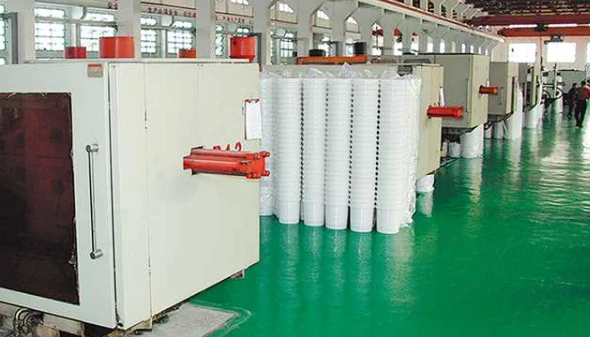
Enlightening Plast operates large-scale manufacturing facilities specializing in industrial plastic containers. Their factory-direct model eliminates distributor markups, offering competitive pricing on virgin HDPE buckets with UN, FDA, and ISO certifications. The company supports wholesale 5 gallon buckets with lids starting at 500-unit MOQs and provides customization including color matching, embossing, and modified handle designs. With extensive export experience, they manage global logistics for international buyers.
Mauser Packaging Solutions brings multinational scale with facilities across North America and Europe. Their strength lies in serving Fortune 500 accounts requiring consistent quality across multiple geographic locations. Premium pricing reflects their extensive distribution network and established brand recognition in regulated industries.
Berry Global offers broad product portfolios beyond buckets, making them suitable for buyers needing multiple container types from a single vendor. Their industrial bucket lines emphasize recycled content options for sustainability-focused procurement policies, though this limits food-grade applications.
When comparing suppliers for 5 gallon buckets for sale, create a scorecard evaluating certification breadth, unit pricing at your volume tier, customization capabilities, lead time reliability, and post-sale support.
The lowest price rarely delivers the lowest total cost when factoring in compliance risks and operational disruptions.
Conclusion
A 5 gallon bucket holds 20 quarts-but successful procurement requires understanding material certifications, 5 gallon bucket size specifications, and supplier capabilities. Don't risk compliance failures or product losses with substandard containers.
Request a quote from Enlightening Plast today for certified, industrial-grade plastic buckets with factory-direct pricing and volume discounts on orders starting at just 500 units.


